What Happened
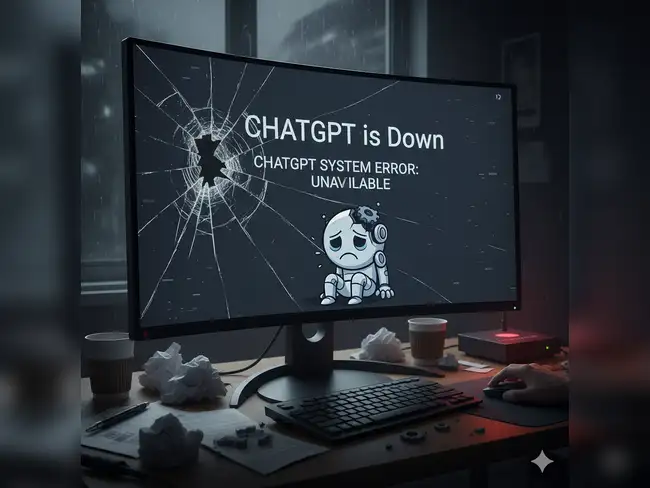
On October 30, 2025, ChatGPT faced a major global outage, leaving thousands of users — especially those on the free tier — unable to access the service. Users began reporting widespread errors, login failures, and timeouts across regions, with Downdetector showing a huge spike in outage reports.
OpenAI quickly responded via its official status page, confirming that ChatGPT was “currently experiencing issues” and that engineers were working to restore functionality. However, no estimated timeline for full recovery was shared initially. Reports indicated that paid users, including ChatGPT Plus and Team subscribers, experienced fewer interruptions.
User Reactions Flood Social Media
As the outage spread, users turned to platforms like X (formerly Twitter), Threads, and Reddit to share their frustration — and humor. Comments like “ChatGPT is down and now I actually have to think” quickly went viral, sparking memes and jokes about society’s growing dependence on AI.
While some users expressed irritation at work delays, others took the downtime in stride, comparing it to a “digital blackout.” At the same time, many shifted to alternative AI chatbots, including Anthropic’s Claude, Google’s Gemini, and Perplexity AI, which saw temporary spikes in usage during ChatGPT’s downtime.
Ongoing Technical Challenges
This isn’t the first time OpenAI has faced service reliability issues. Earlier in the same month, users in the UK and Asia also reported brief outages, suggesting ongoing challenges in managing global traffic and high demand.
Large-scale AI platforms like ChatGPT operate on distributed cloud systems — meaning even minor infrastructure hiccups can ripple globally. The OpenAI status history page lists several prior incidents showing “elevated error rates,” indicating that maintaining stability at such a massive scale remains a complex task.
Dependence on AI Tools
The outage also reignited a larger discussion: how dependent have we become on AI tools? Many users admitted they rely on ChatGPT daily for coding, research, writing, and brainstorming. The sudden downtime disrupted office workflows, classroom lessons, and even creative projects — serving as a reminder of how integrated AI has become in everyday productivity.
At the same time, the event highlighted an opportunity: users explored other AI tools and discovered new options in a competitive space. This could push OpenAI and others to innovate faster while ensuring better redundancy, transparency, and uptime reliability.
Aftermath and Resolution
Hours after the initial outage, reports began surfacing that ChatGPT was gradually coming back online. Users noticed improvements in speed, response accuracy, and overall stability. OpenAI has since continued monitoring performance and pledged to strengthen its infrastructure to reduce future downtime.
In Summary
- ChatGPT experienced a global outage on October 30, 2025, mainly affecting free users.
- OpenAI confirmed the disruption and began an active investigation with no fixed resolution time initially.
- User reaction included humor, frustration, and migration to competing AI chatbots.
- The event highlighted global reliance on generative AI tools and the need for robust uptime systems.
- OpenAI restored service later that day, continuing its focus on reliability and performance improvements.
Reference Links
- OpenAI Status History
- ChatGPT, Sora Are Down, OpenAI Confirms – Investopedia
- Downdetector Reports OpenAI Services Experiencing Outages – Economic Times
- Don’t Worry, ChatGPT-4o Isn’t Being Phased Out in October – TechRadar
- ChatGPT Global Outage Coverage – Times of India